Home/Raccoons
Raccoon Removal in Albany
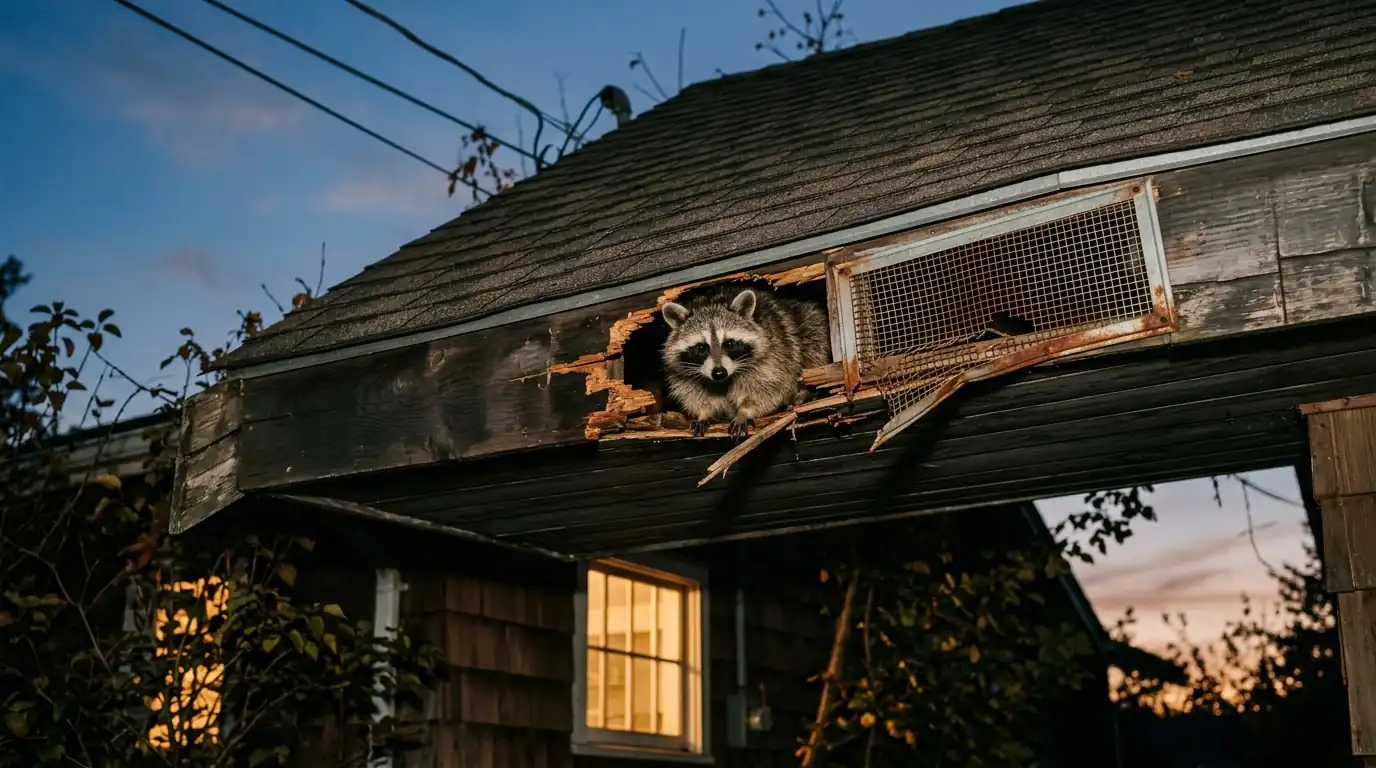
Raccoons tear their own way in, which is why they do more damage to a house than most animals that get inside one.
The thing to look at in Albany is the roof’s history. Between the January 2017 tornado and Hurricane Michael in October 2018, a very large share of the housing here has been re-roofed, patched or tarped at some point in the last decade. Raccoons do not need a hole to start with; they need an edge they can get a hand under, and storm repairs leave edges.
Raccoons in Dougherty County: who does what
The City of Albany Animal Control publishes its remit as dog fighting, inhumane treatment, animals running at large, cruelty, dangerous dogs, bite cases and enforcement of the city animal control ordinance. Wildlife is not on that list at all: the department describes itself as responding to calls concerning domestic animals. There is no municipal service here for an animal in your attic, and no referral published either.
Animal control for both Albany and Dougherty County is the Albany Police Department’s Animal Control unit, one number for both (229-431-2132), which describes its work as patrolling city streets and answering calls about domestic animals.
For identifying an animal or damage before anyone is paid to look, the UGA Extension, Dougherty County office is at 125 Pine Avenue, Suite 100, Albany, GA 31701, (229) 436-7216 (office page).
What Georgia law says about raccoons
Raccoons have no closed season and no bag limit on private land in Georgia, and a homeowner may remove one during the regulated seasons or get a DNR nuisance permit when one is damaging property. Raccoons are a rabies vector species, so a licensed operator may not relocate one: it must be euthanized, and if it bit or scratched a person or pet, the county health department’s rabies-testing instructions apply. All Georgia rules →
Sources: City of Albany, Animal Control; Georgia DNR: 2025-26 season dates; Georgia DNR: raccoon fact sheet; Georgia DNR: Nuisance Wildlife Control study material (O.C.G.A. 27 and permit conditions). Checked October 2026.
Signs, and why they matter
- Heavy, deliberate footsteps overhead: raccoons are big enough to sound like a person walking
- Chittering, growling or the distinctive cry of kits, usually at dusk or just before dawn
- A torn soffit, lifted shingles, or a ripped roof or gable vent
- Rabies: raccoons are a primary rabies vector across the southeastern United States
- Raccoon roundworm (Baylisascaris) in the droppings, which is dangerous to people and pets
How removal works
A licensed operator finds every entry point, removes the animal, and critically any kits, which are usually hidden in a wall cavity or soffit and cannot leave on their own, then seals the openings with materials a raccoon cannot tear off. Sealing before the young are out is the most common and most expensive mistake.
Raccoon questions
How much does raccoon removal cost in Albany?
$300 – $600 for removal; far more if the attic needs restoring, depending on access and whether young are present. After a long stay in an attic the cleanup is often the bigger bill (attic restoration).
Is there a wrong time of year to deal with raccoons?
Spring is the worst time to trap and seal: females den in attics to give birth, and removing the mother while kits remain leaves them to die inside the structure.
Who handles raccoons in Dougherty County?
Animal control for both Albany and Dougherty County is the Albany Police Department’s Animal Control unit, one number for both (229-431-2132), which describes its work as patrolling city streets and answering calls about domestic animals.
Request a quote
We read every request and pass it to a licensed wildlife operator covering Albany where one is available. We are still building our list of operators here, so we cannot promise one is available or say how quickly they will respond.